0:00
0:00
Speed
 By Muhammad Haris · November 15, 2026 · 6 min read
If your Philippines business has a website that brings in little traffic, or traffic that never turns into enquiries, the usual advice is to “do more SEO” — more content, more links, more spend. But before spending anything, you need to know what is actually wrong with the site itself. That is what a technical seo audit philippines businesses commission should answer: the site’s foundations examined, problems ranked, fixes named.
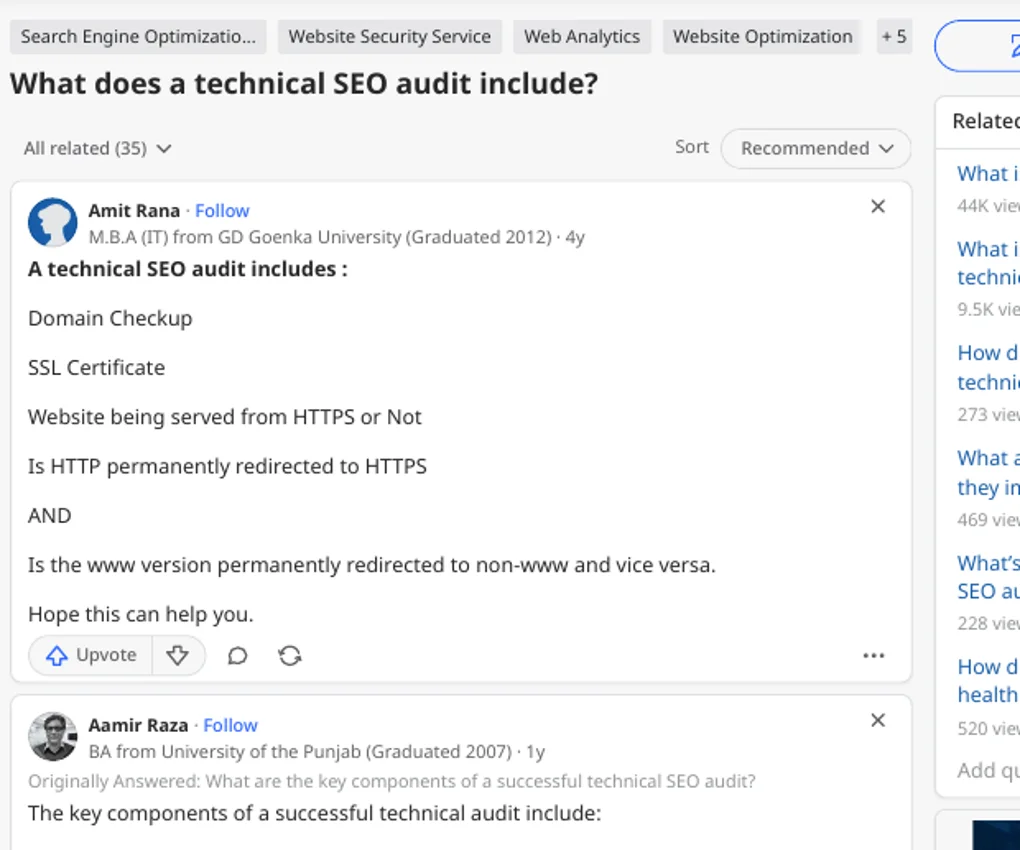
A technical audit is narrower than a full SEO audit, and that is its strength. It does not judge your content strategy or your backlink profile. It asks one question: can search engines reach, understand, and index your site properly?
The checks fall into seven areas.
Crawling comes first. The auditor checks whether search engines can reach your pages: broken links, redirect chains, mistaken blocks, server errors. A page that cannot be crawled cannot rank, no matter how good its content is.
Indexing comes second. The auditor checks which pages search engines have actually indexed, and whether the wrong pages are in the index — staging copies, tag pages, thin duplicates — while important pages are missing.
Speed comes third, and in the Philippines it carries extra weight. Many Filipino customers search on a phone over a slower connection, so a page that loads acceptably on office broadband may crawl on mobile data. The auditor measures real mobile load times and names the causes: uncompressed images, heavy scripts, slow hosting.
Mobile rendering comes fourth. The auditor checks how pages actually look and behave on a phone: text too small to read, buttons too close together, content wider than the screen, pop-ups blocking the page. Google indexes the mobile version, so a broken mobile layout means a broken site.
Canonicals come fifth. When the same content appears at several addresses — with and without www, with tracking parameters, http and https versions — the auditor checks that one canonical version is declared.
Sitemaps and robots rules come sixth. The auditor checks that your sitemap lists the pages that matter and is up to date, and that your robots file blocks only what should be blocked.
Structured data comes seventh. The auditor checks whether your pages carry the markup that helps search engines understand what they are — business details, products, articles, FAQs — and whether that markup is valid. Broken markup removes the chance of rich results.
Two things about the Philippines change the priorities. The first is mobile-first, taken literally: most Filipino searches happen on a phone, often on a slower connection, with immediate intent. So speed and mobile rendering sit near the top of a Philippines technical audit, not at the bottom.
The second is language. Much of the Philippines’ commercial search happens in English, especially for professional services, but many customers also search in Filipino — particularly for local services, food, and health. A technical audit should check that language versions are handled properly where they exist: the right pages marked for the right language, and no language version accidentally blocked from indexing.
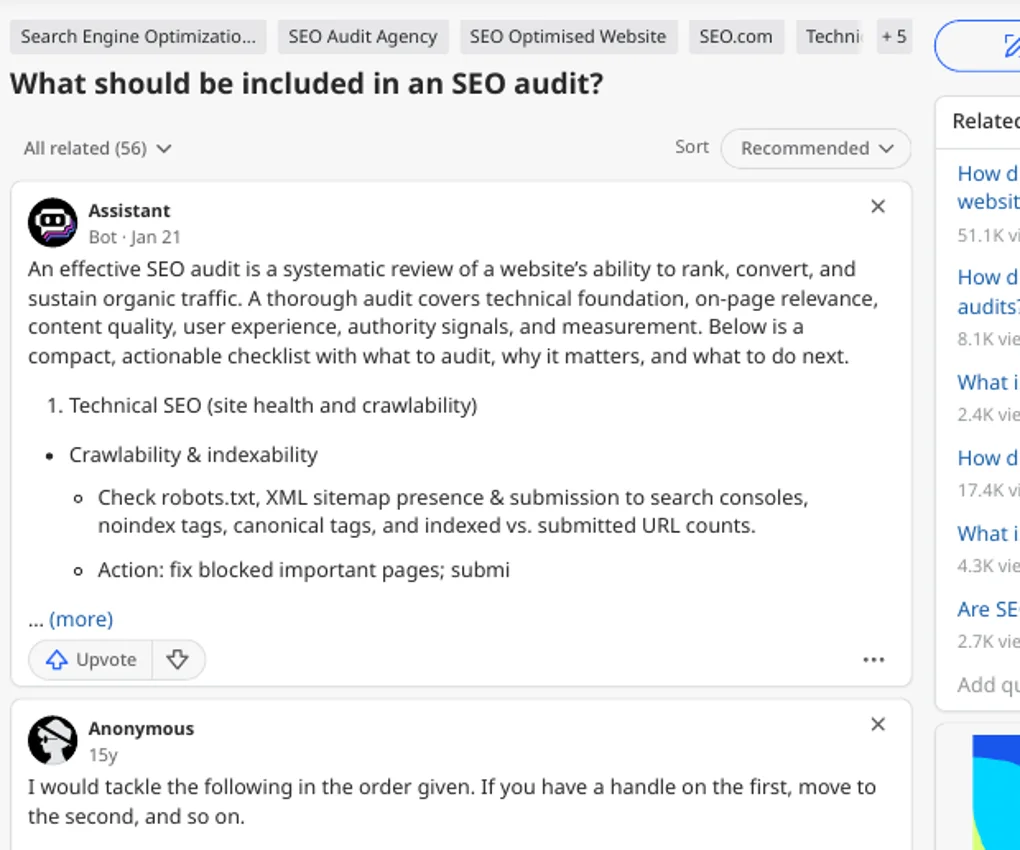
A good technical audit does not hand you a list of a hundred issues and leave you to sort them. It ranks them. The findings that block search engines from reaching or indexing your pages come first. Then the problems that lose visitors — slow pages, broken mobile layouts, missing pages. Then the improvements that build rankings over time.
Read the findings in that order, and be suspicious of any report that treats every issue as equally urgent. A missing meta description on one page and a site-wide indexing block are not the same problem. Look for causes, not just symptoms: “page is slow” is a symptom; “uncompressed images and three unused plugins delay the homepage” is a cause you can act on. A proper audit names the cause, the pages affected, and the fix.
A good report is written for the business owner, not for another SEO. It opens with a short summary: the three or four problems that matter most, and what fixing them should change. Then it works through each area with findings, evidence, and recommended actions.
Each recommendation should be specific enough to hand to whoever does the work: which pages, what to change, and in what order. Vague advice like “improve site speed” without saying which pages and what is slowing them is not a recommendation; it is filler.
For the wider picture of how audits fit into an SEO programme, see the SEO audit service page, and the guide to how to do an SEO audit walks through the broader checks in more detail. The technical SEO foundations explain why the technical findings usually come first.
The most common red flag is the free automated report. A tool can scan a site in minutes and produce a long list of issues, but it cannot judge which matter, what caused them, or what your competitors are doing differently. A free report with no human analysis is a lead magnet, not an audit — and its real purpose is usually to sell you the fix, whatever the findings say.
A second red flag is an audit that only ever recommends one thing: a rebuild. Sometimes a rebuild is genuinely needed, but an auditor who reaches that conclusion before examining the site has decided the answer in advance.
A third red flag is a report with no priorities and no prices. If everything is urgent and nothing has a cost attached, you cannot plan.
An audit is only useful if it changes what happens next. Start with the blocking issues — anything stopping search engines from reaching or indexing your pages — then the quick wins: the worst speed problems, broken mobile layouts, and sitemap or robots mistakes. These can move visibility within weeks.
Then work through the rest in severity order, not alphabetical order. Re-check after the fixes: a single audit is a snapshot, and a second check confirms what actually changed and what is still holding the site back.
Finally, build the audit into a routine. Technical problems usually follow changes — a redesign, a migration, a new plugin — so check after every change.
Q: What does a technical SEO audit in the Philippines cover?
A: Seven areas — crawling, indexing, speed, mobile rendering, canonicals, sitemaps and robots, structured data — ranked by severity, each with a named fix.
Q: How is a technical audit different from a full SEO audit?
A: A technical audit examines only the site’s foundations — whether search engines can reach, understand, and index it. A full audit adds content and authority work on top of that.
Q: How long does a technical SEO audit take?
A: It depends on the size of the site and how many problems it has. A small business site can be audited in days; a large site with hundreds of pages takes longer. Be wary of any audit delivered in minutes — that is an automated scan, not an audit.
Q: Is a free technical audit worth it?
A: As a starting point, sometimes — but it cannot judge which issues matter or what caused them. Treat it as a lead magnet, and commission a proper audit before spending.
Q: What should I fix first after a technical audit?
A: Anything blocking search engines from reaching or indexing your pages, then the quick wins — the worst speed problems, broken mobile layouts, and sitemap or robots mistakes — then the remaining fixes in severity order.

Muhammad Haris is the Founder of Onyx Growth Labs — an SEO specialist, content writer and SEO team lead. He writes the agency's guides on SEO, AI search optimisation, GEO and AEO, technical SEO, local SEO, Google Business Profile optimisation, link building and content strategy. Based in Abbottabad, Pakistan, he helps businesses worldwide get found on Google and in AI search answers.
If your customers speak more than one language, an English-only website is quietly turning some of them away. Multilingual SEO is the…
Read articleIf you run a business and you have ever uploaded a video, the questions you ask first are always the same: why…
Read articleIf you run a business in Sheffield, the questions you ask before hiring SEO help are always the same: what does it…
Read article


Leave a Reply