0:00
0:00
Speed
 By Muhammad Haris · November 17, 2026 · Last updated: November 20, 2026 · 6 min read
If you have started checking whether your business appears in AI answers, you have probably found a new problem: a growing number of tools promise to track it, and they all measure different things. This guide explains what these tools measure, the four types available, and how to pick one without paying for a number you cannot trust.
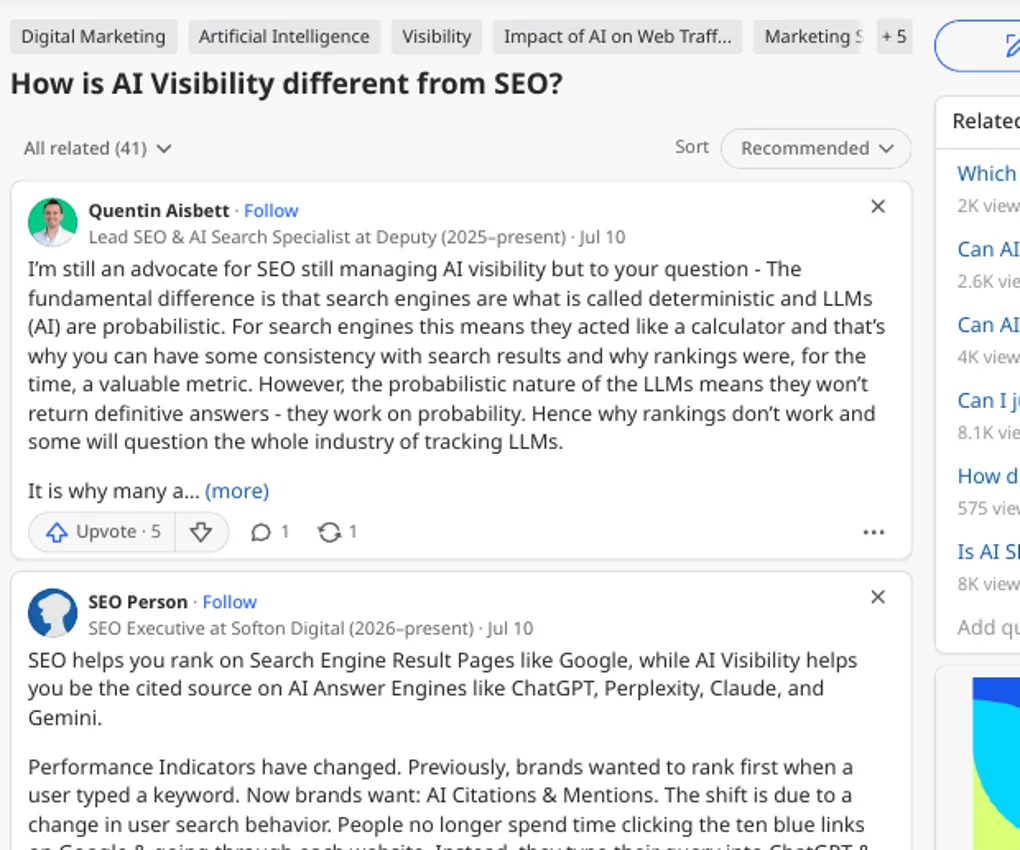
It helps to know the five things tools claim to measure, because no tool measures all five well.
Citations are the clearest measure: whether an AI answer links to or names your pages as a source.
Mentions are looser: whether your brand name appears in an answer at all, cited or not. A mention without a citation still means visibility, but not proof your content was the source.
Share of answers is a proportion: for a set of questions your customers ask, how often does your brand appear? This only means something if the question set is yours.
Sentiment is the tone of the mention: positive, neutral, or negative. A tool that counts mentions without sentiment can call a complaint a win.
Prompt coverage is the breadth of the question set: how many of your customers’ real questions the tool checks, and whether it covers the AI systems your customers actually use.
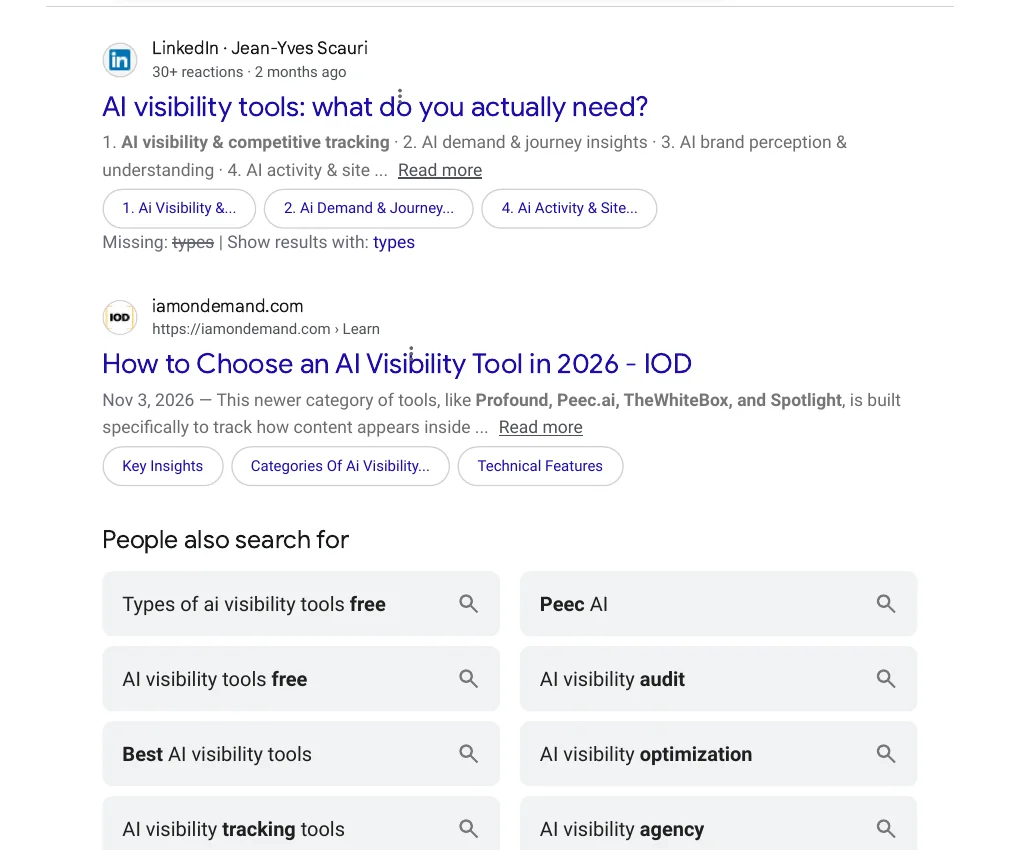
Most tools fall into four types, and the type matters more than the brand.
Prompt-tracking tools run a fixed set of questions through AI systems on a schedule and record whether your brand appears. Strength: consistency. Weakness: narrowness — they only see the questions you set.
Citation monitors watch for links to your site inside AI answers. Strength: evidence, since a citation is a concrete result. Weakness: coverage, since many answers mention brands without linking.
Rank-style dashboards borrow the look of traditional rank trackers, with scores and charts. Strength: familiarity. Weakness: false precision — a single “visibility score” blends citations, mentions, and sentiment into one number.
Manual checks are the fourth type, and the one every buyer should keep: asking your customers’ questions yourself in AI tools and recording what appears. Strength: honesty, since you see the actual answer in context. Weakness: scale — you cannot check hundreds of prompts by hand.
See our guide to how to track AI visibility for what to measure first.
A good report shows its working. It lists the exact prompts checked, the AI systems used, and the raw results behind any score.
It separates its measures rather than blending them, so a rise in mentions does not hide a fall in citations. It shows trends over weeks, not single snapshots, because AI answers vary between sessions and one day’s result proves nothing.
And it is honest about its limits. A tool that cannot see every AI system, or that samples answers rather than checking them all, should say so plainly.
The clearest red flag is a single-prompt score: a tool that reduces your whole AI presence to one number from a handful of questions. A narrow question set can be gamed, and a single score hides exactly what you need to see.
A second red flag is a black-box accuracy claim: a tool that says it measures “accuracy” or “authority” without showing how. If you cannot see the prompts and the counting method, you cannot trust the output.
A third red flag is no prompt transparency: a tool that will not let you add your own customers’ questions, or that hides which questions it checks. A tool built around someone else’s question set measures someone else’s visibility.
A fourth red flag is a guarantee: no tool can promise your brand will appear in AI answers, because no tool controls which sources an AI system cites.
First, write your own prompt set before the trial starts: twenty to thirty questions your customers actually ask, in their own words. Hand the same set to every tool you trial, so the comparison is fair.
Second, set a baseline. Record what the tool shows in week one, and check a sample of the answers yourself. If its numbers do not match what you see, trust your eyes.
Third, run the trial long enough to see a trend — at least a few weeks. A tool that looks impressive on day one and flat by week three has told you something useful: that its early numbers were noise. Judge the report, not the dashboard.
Our guide to how we rank in AI Overviews shows the source-level thinking a good tool should support.
For many small businesses, manual checks are not a fallback — they are the better choice to start.
They win when your question set is small: checking a few dozen questions yourself each month costs little and shows you the full answer, including tone and competitors. They win when sentiment matters: a human spots a backhanded mention that a tool may count as a win. And they win when you are starting out: a month of manual checks tells you whether AI answers even mention your market, and which questions matter most.
Tools win when the question set grows beyond what you can check by hand, or when you need weekly trends across many questions. The sensible path is manual checks first, then a tool once you know which questions matter.
That order also protects you from the commonest waste in this market: paying for a dashboard before knowing what you want it to measure. A content strategy built around real customer questions gives a tool something worth measuring.
There is no best tool type for everyone, only a best fit for your question set and budget. A prompt tracker suits a business with a clear, stable set of customer questions. A citation monitor suits one that cares most about sourced answers. A dashboard suits a larger team that needs regular reporting — provided it shows its working. And manual checks suit any business starting out.
Whatever type you choose, keep three rules. Own your prompt set: the questions must be your customers’, not the vendor’s. Separate the measures: citations, mentions, and sentiment each visible on their own. And read trends, not snapshots: a pattern over weeks is the only result worth acting on.
A tool that follows those rules is worth paying for. One that hides its prompts, blends its measures, or promises placement is not. If you want to talk through your own measurement plan, the contact page is where to start.
Q: What should an AI visibility tool measure?
A: Citations, mentions, share of answers, sentiment, and prompt coverage — each shown separately, not blended into a single score.
Q: Is a single visibility score trustworthy?
A: No, not on its own. A blended score hides which measure moved and why. Insist on seeing each measure separately, with the prompts behind them.
Q: How many prompts should I track?
A: Start with twenty to thirty questions your customers actually ask, in their own words. A small, honest question set beats a large generic one.
Q: Should a small business pay for an AI visibility tool?
A: Not necessarily at first. Manual checks each month often show more, including tone and competitors, until your question set outgrows what you can check by hand.
Q: Can a tool guarantee my brand appears in AI answers?
A: No. No tool controls which sources an AI system cites, so any placement guarantee is a red flag.

Muhammad Haris is the Founder of Onyx Growth Labs — an SEO specialist, content writer and SEO team lead. He writes the agency's guides on SEO, AI search optimisation, GEO and AEO, technical SEO, local SEO, Google Business Profile optimisation, link building and content strategy. Based in Abbottabad, Pakistan, he helps businesses worldwide get found on Google and in AI search answers.
If you lead marketing for a large organisation, you have probably discovered that SEO advice written for small businesses does not scale…
Read articleIf you run a small business on a limited marketing budget, the social media vs seo question comes up fast: social posts…
Read articleIf you have ever received an SEO report with a number labelled domain authority, you may have wondered what that number actually…
Read article


Leave a Reply